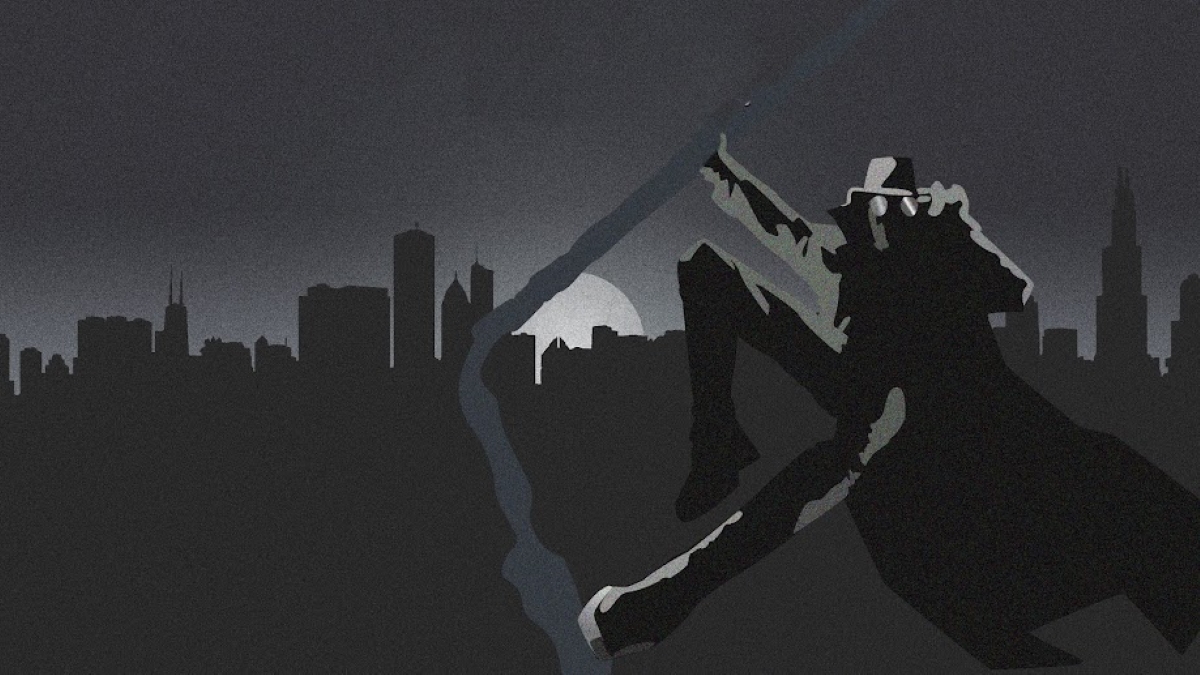
Spider-Man Noir: A Gritty Classic

I’ve been on quite the Spider-Man/comics kick lately! I used to buy a new volume every few months or so as a treat, since used paperbacks cost me $15-$20 a pop, at the very least, and they add up after a while. Now? I’ve been buying BIG volumes of comics digitally for much cheaper, and reading them on my phone with the Kindle App. I’ve given in to my inner nerd, haha.

I wasn’t too sure what to think of the Spider-Man Noir run before I read it. After all, this version of Spider-Man definitely isn’t the Friendly Neighborhood version most mainstream fans have come to know and love. He’s still Peter Parker. But his reality is that of 1930’s-1940’s New York ravaged by crime and the Great Depression. It’s dark, bleak and grim. But thanks to author David Hine, it’s also suspenseful, thrilling and exciting!

Peter is more of a vigilante here than a superhero. And all of this stems from the death of his Uncle Ben. However, unlike his mainstream counterpart, this version of Peter Parker’s Uncle Ben wasn’t shot by a burglar. Instead, he was cannibalized by his world’s version of the Vulture, because he succeeded in leading a protest or strike that ended up shutting down one of the businesses serving as a front for the city’s crime boss, Norman Osborn. The Goblin.

This comic is definitely not family friendly, nor is it for kids. It’s not quite as dark as the Punisher comics I have in my stash. But it’s still in that same vein. However I still loved this comic for its pacing, constantly moving and exciting story, and for some of the deeper themes. It also reminded me of a couple of my favorite movies in various ways. It’s definitely well worth the read if you’re into dark dramas and crime stories. And if you’re one of those people who likes those black and white classic detective films, you’ll practically be able to hear dark jazz in the background as you read this thing!

David Hine did several things, and he did them incredibly well. He combined the mystery and suspense of black and white detective films, with the action of classic Spider-Man comics featuring darker versions of several Marvel characters such as Ben Urich, Daredevil, the Black Cat (known here as the White Widow), Doctor Octopus, Robbie Robertson, the Chameleon and others. Not to mention he created an entirely original story while also staying true to the personality of these characters and their origin stories. There’s also just the right mix of downtime where Spider-Man searches for the next person of interest in his quest to take down Norman Osborn, Otto Octavius, or any of the other villains. Then after Spidey has found his lead, the action is a nonstop race to the conclusion of the story!

Comparisons to Sin City and Roadhouse

I didn’t expect to see similarities between the comic book and two of my favorite action movies. But two powerful similarities popped up in my mind as I was reading: Genuinely good characters standing up to evil like in Sin City, and the sheer terror used by Norman Osborn that’s similar to the terror and intimidation used by Brad Wesley, the main villain in the Patrick Swayze movie Roadhouse.

Like a few characters in Sin City, the movie adaptation of Frank Miller’s dark graphic novel, the Spider-Man Noir version of Peter Parker is one of the very few genuinely good-hearted people in an otherwise dark, nasty, crime-infested reality. Although at times he is a violent vigilante, he is an idealist. He wants the world to be better for everyone, and he believes there still are heroic and good people in the city. He’s just frustrated that nobody speaks up or actively fights against the Goblin and his goons, even though the people know they’re living under a ruthless crime boss who terrorizes anyone who opposes him. That’s Spider-Man’s driving motivation for doing what he does. He’s willing to take action when no one else will.

The gloomy, dark, crime-ridden world of Spider-Man Noir reminds me of the Sin City movies because there are only three truly heroic men in the films who actively try to fight against corruption, and do the right thing: Detective John Hartigan (played by Bruce Willis), Dwight McCarthy (played by Josh Brolin), and Marv (played by Mickey Rourke).

Sin City: A Dame to Kill For (Second from left: Dwight. Third from left: Marv. Far right: John Hartigan)

In the world of Sin City, and its sequel, Sin City: A Dame to Kill For, the three men live in a crime-infested place known as Basin City. The city is ruled by the corrupt and ruthless Roark Family, headed by Senator Roark, his brother the corrupt Cardinal Patrick Henry Roark, and Senator Roark’s son, a child molester and child killer known simply as Roark Junior.

Hartigan, Dwight and Marv each fight against the corruption in Sin City in their own way. Hartigan hunts down Roark Junior. He wants to kill him to “cut the bloodline” of the Roark family, so the family will end, and perhaps the evil in Sin City one day will as well. Dwight wants to protect the woman he loves, an Old Town prostitute named Gail, at any cost. He aims to keep the peace between the “girls of Old Town” (Sin City’s red light district), and the corrupt cops in Senator Roark’s back pocket. Lastly, Marv sets out on a vigilante mission to find out who killed “Goldie.” a blonde-haired prostitute he fell in love with, who was the only person who ever showed him any kindness in his life.

Two of the three characters, Hartigan and Marv, end up dead while Dwight survives both films. But in my eyes, all three characters share Spider-Man Noir’s belief that evil triumphs when good people do absolutely nothing. So they fight it with everything they have, even when it may very well cost them their lives.

Spider-Man Noir is similar to Roadhouse, in that Norman Osborn rules New York with an iron fist in the same way Brad Wesley rules the Missouri town he’s in charge of. Nothing happens without Osborn’s say so. And nobody dares to challenge him. Anyone who does ends up dead. In Roadhouse, once Brad Wesley realizes how big of a threat Dalton (Patrick Swayze) is becoming, he has his friend Wade Garrett (played by Sam Elliott) killed to try to intimidate him. Similarly, when Peter’s friend Ben Urich is about to send incriminating information on Norman Osborn to the Daily Bugle, Norman sends the Chameleon (disguised as J. Jonah Jameson) to kill Urich so he can make an example of him, and to intimidate Peter and others.
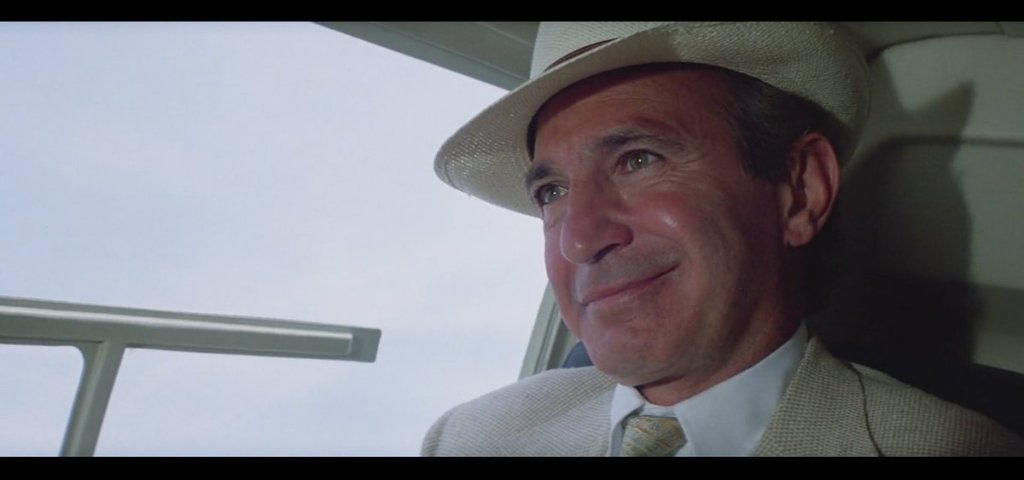
Ben Gazzara as crime boss Brad Wesley in Roadhouse (1989)

As I read through Spider-Man Noir, I could actually “feel” the constant presence of Norman Osborn, even though he didn’t show up in every page. Obviously he’s a fictional character, but David Hine was a master at getting readers to put themselves in the shoes of the decent characters in an otherwise dark society. Peter Parker, his Aunt May, Felicia Hardy, Mary Jane Watson and others, all lived under threat from Norman Osborn and his henchman. I was constantly wondering when Norman Osborn would go after them, or what he’d go after them for. That suspense kept me hooked. I couldn’t put the book down until I finished it, because I had to see how Peter and the others eventually took down the Goblin. I had to see how they got rid of him, so they no longer had to deal with that fear in their lives.

Segregation and Racism

The last two powerful themes kind of went hand in hand in Spider-Man Noir. Since the comic book is set in the 1930’s and 1940’s, I was wondering when segregation and racism were going to come up. David Hine made sure they came up. In spades.

Robbie Robertson, one of Peter Parker’s friends, superiors and coworkers in the original timeline, plays a similar role in Spider-Man Noir. Although when he follows a lead that there are possibly Nazis hiding out in America, and that Otto Octavius (Doctor Octopus) is a scientist working for them, no one takes him seriously. Partly because they don’t believe him. But mostly because they don’t respect him due to the fact that he is a black man. People make plenty of overtly racist jokes ridiculing him. Finally, he gets so fed up, that he decides to quit waiting for the lead to develop, and go see for himself if his hunch is correct.

Unfortunately, Robbie’s gut feeling is proven correct: He sees shackled black people being shipped in by the boatload at a dock one night. But these people aren’t slaves. They’re going to be used by Doctor Octavius for experiments. Experiments funded by Nazi leaders living in New York. No one here yet fully knows how evil the Nazi ideology is, since this story takes place in the summer of 1940, over a year before America enters World War II.

This part of the comic book was interesting, yet shocking and sad. Otto Octavius is a brilliant scientist. But he’s confined to a wheelchair thanks to some unspecified disease (I think it’s polio, even though it’s never explicitly said). His solution? Round up all of New York City’s homeless or poor black people, and experiment on their DNA to see if they hold the key to curing his disease and other diseases. Doctor Octavius is a fervent believer in the Nazi ideology. This causes him to see black people as subhuman. Little more than cattle. So he shows absolutely no remorse whenever his experiments put any of the people in a permanent vegetative state. They’re just throwaways to him, after all.

Tragically, Robbie is captured by the Nazis when he confronts them, and he is permanently screwed up once Doctor Octavius experiments on him. He is still alive after the experiment, though he cannot think for himself, and obeys whatever anyone else tells him to do, like a slave.

Although Spider-Man Noir as a whole is gritty and dark, the Goblin and Doctor Octavius are eventually defeated. The Goblin is killed by a swarm of spiders after a fight with Spider-Man, and one of Dr. Octavius’ assistants turns on him, killing him. The book ends with the original Spider-Man somehow transporting Spider-Man Noir to an alternate version of 2014, because a godlike version of Mysterio poses a threat to every reality, and all of the Spider-Men within these different realities. Spider-Man Noir goes with the original Spider-Man, leaving Black Cat/White Widow to defeat the few remaining Nazis in their reality.

Spider-Man Noir ended on a weird note. Although maybe there are other Spider-Man Noir issues I need to read in the future to finish the story? Regardless, I loved this book! It’s one of my favorite comics I’ve ever read or bought, and I would recommend it to anyone who is a comic fan, loves action, or is someone who can understand deeper themes within stories. There was so much to chew on and process within this book, that it would not surprise me if I have to reread it to catch any details that went over my head. It’s a dark, gritty, powerful masterpiece!
Adult Lessons from a Childhood Favorite

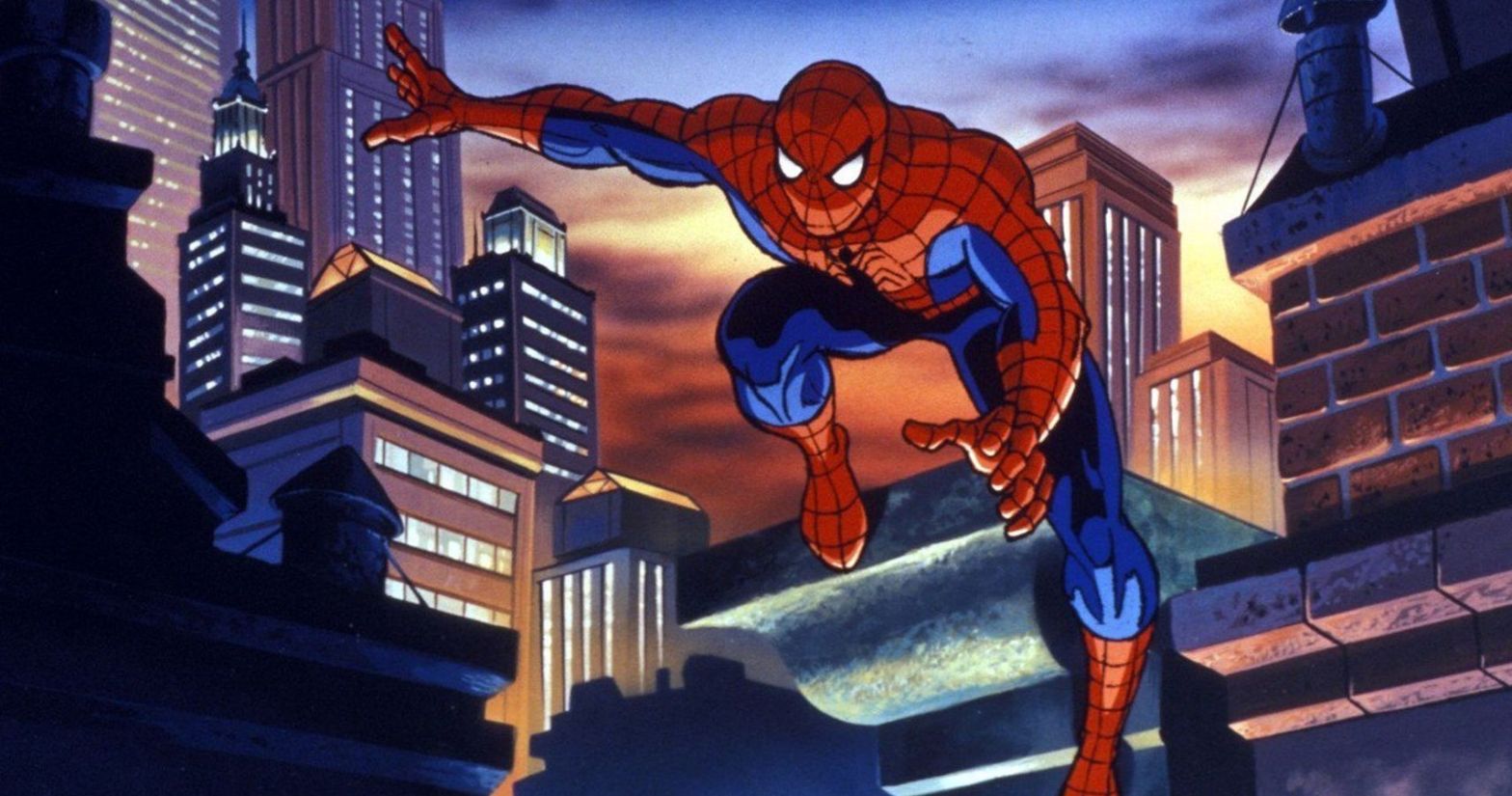
Ever since I was a little boy, I have always absolutely loved the 1990’s Spider-Man Animated Series. It’ll be one of those timeless shows I’ll introduce to my children if I have any in the future. It’s such a wholesome show that everyone young and old can enjoy and get something from, and it’s better than 99.9% of the stuff on TV today in 2021.

But back in 1995-1996 when I was little, the routine Dad and I had was like clockwork: As soon as Pop got home from work around 3:00, 4-5 year-old Luke would sit on the floor while he’d sit in the recliner, and turn the channel so we could tune into the newest episode. As soon as the unmistakable theme kicked in, and Joe Perry of Aerosmith unleashed that signature guitar riff, I was excited and ready to roll!

The show had everything! Nonstop action, fantastic storytelling, and top-notch voice acting led by Christopher Daniel Barnes (Peter Parker/Spider-Man), Ed Asner (J. Jonah Jameson), Jennifer Hale (Felicia Hardy/Black Cat) and others. It didn’t need to rely on anything other than these things to draw people in, unlike a lot of TV shows today.

In fact, Spider-Man’s showrunners seemed to go out of their way to avoid anything remotely dark, violent or scandalous since it was a kids/family show. Guns were replaced with laser rifles and laser pistols. Nobody was killed onscreen, and there were always other words used as euphemisms for “dead,” “death” or “killed.” Darker Marvel Comics characters such as the Punisher, Daredevil and Kingpin appeared in the show, but they were considerably toned down. And there always seemed to be some moral lesson at the end of most episodes, such as self-sacrifice, doing the right thing for others, and showing courage even when it’s hard.

But in the last two episodes I watched on Disney+, there was a much sadder and more adult theme: Childhood cancer and terminal illness. I must not have remembered that episode, because I had never caught that until now. I’m man enough to admit that once I realized that’s what was going on, I softened up and broke down. I’ve known and loved the show for decades, and I just now caught that. It brought me to my knees, because cancer has affected my family, and I know people who are currently fighting that awful disease, or they have family members fighting it with them.

In Episodes 2 and 3 of Season 3 from 1996, titled “Make a Wish” and “Attack of the Octobot”, Peter Parker is at the end of his rope. Things aren’t going well for him at all. Mary Jane has left him for Harry Osborn because he’s too busy as Spider-Man (even though she doesn’t know), and J. Jonah Jameson has turned New York City against him. He’s fed up. He wants to quit his life as Spider-Man.

But one day, Robbie Robertson, one of his superiors at the Daily Bugle gives him a fan letter. Robbie thinks Peter works for Spider-Man as his personal photographer, and tells him to contact Spider-Man so he can meet a little girl who loves him and is his biggest fan. But Peter is so jaded about his life as a superhero, that he puts the letter away in a filing cabinet, ignoring it. But one day on his walk home from work while he’s dreaming of a normal life, Peter notices the letter in an alleyway, and hears a voice urging him to continue his work as Spider-Man.

He is then suddenly transported to another dimension, where he meets Madame Web, a wise old lady with the powers of clairvoyance. She’s been watching him, and can see his future. She tells him that the biggest mission of his life is yet to come. But in order to succeed, he must undergo training from her, and learn to have the faith of a child.

After he is returned to reality, he visits the little eight-year old girl in the letter. She’s absolutely thrilled that her hero came to visit her, and she gives him the biggest hug! He then tells her his origin story, shows her how his powers work, and spends quality time with her. But he’s still frustrated with how his life is going. He still wants to quit. She pleads with him to keep going, but he refuses.

He tries to take off, but she persuades him to take her web swinging with him so she can see the city like he sees it every day. Unfortunately, both of them are captured by Doctor Octopus and Spider-Man gets amnesia from one of his weapons. It is only through the love that the little girl, Taina, has for him that he remembers who he is and how much he inspires her and others. After defeating Doctor Octopus and taking her home, Spider-Man thanks Taina for supporting him and briefly takes off his mask just for her. He reveals himself as Peter Parker. Peter then tells her that she is his hero, and promises her that he’ll continue being Spider-Man, and he swings off into the night.

That last bit may seem cheesy to some. But reality hits once the camera zooms in on a medical center after Spider-Man swings past it. It’s a center for terminally ill children. Taina’s situation becomes crystal clear: She’s terminally ill. She’s going to die. And she wanted to meet her hero before she passed away. I had never caught that last thing before tonight, since the show actively avoids directly mentioning death or anything dark. And Taina wasn’t bald or frail. She looked perfectly healthy (probably so things didn’t get too dark or depressing since it’s a kids’ cartoon). But once I caught what was going on, it hit me like a ton of bricks.

Spider-Man may be a kids’/family cartoon, but after the episode I just kind of sat still for a couple minutes to calm myself down and gather my thoughts. After that I started thinking about so many things. My own mortality, truly appreciating life, and anger and confusion at the fact that innocent little boys and girls still suffer and die from cancer and other diseases. I don’t think anyone deserves cancer or any other related disease, but it shatters my heart when I see little ones having to deal with that kind of thing.

I will always consider myself a Christian. Even in my weakest times with my faith. But the big thing I’m struggling with right now, is why God allows people to be afflicted with such horrible diseases, especially children. Some will tell me that God allows cancer to happen, so His glory can be revealed in how people can come together to battle the disease. Perhaps they’re right, and that is how God works. But I still can’t get around why He allows it to happen in the first place. I try to be grateful, and hold steadfast to my faith that there is indeed something beyond this life, and that there is an all-good, all-wise and all-powerful God who controls all of this. But boy does He make it hard to do so at times like now.

I will still believe in God even when I am angry, hurt or confused. But after I wrestle with life’s mysteries, I am often reminded to appreciate my life since I still have it, and I hug my loved ones tighter. Hug your loved ones a little tighter, folks. Love them hard, cherish your time with them and be grateful. There’s no way of knowing how much time you have left. And none of us are getting out of this ride alive.

My Love of Comic Collecting

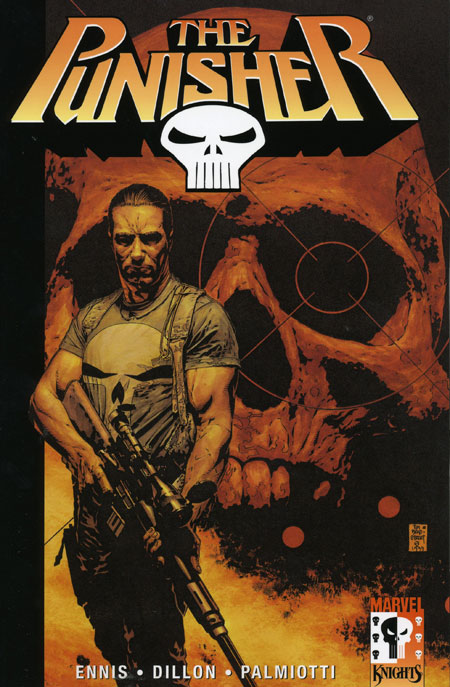
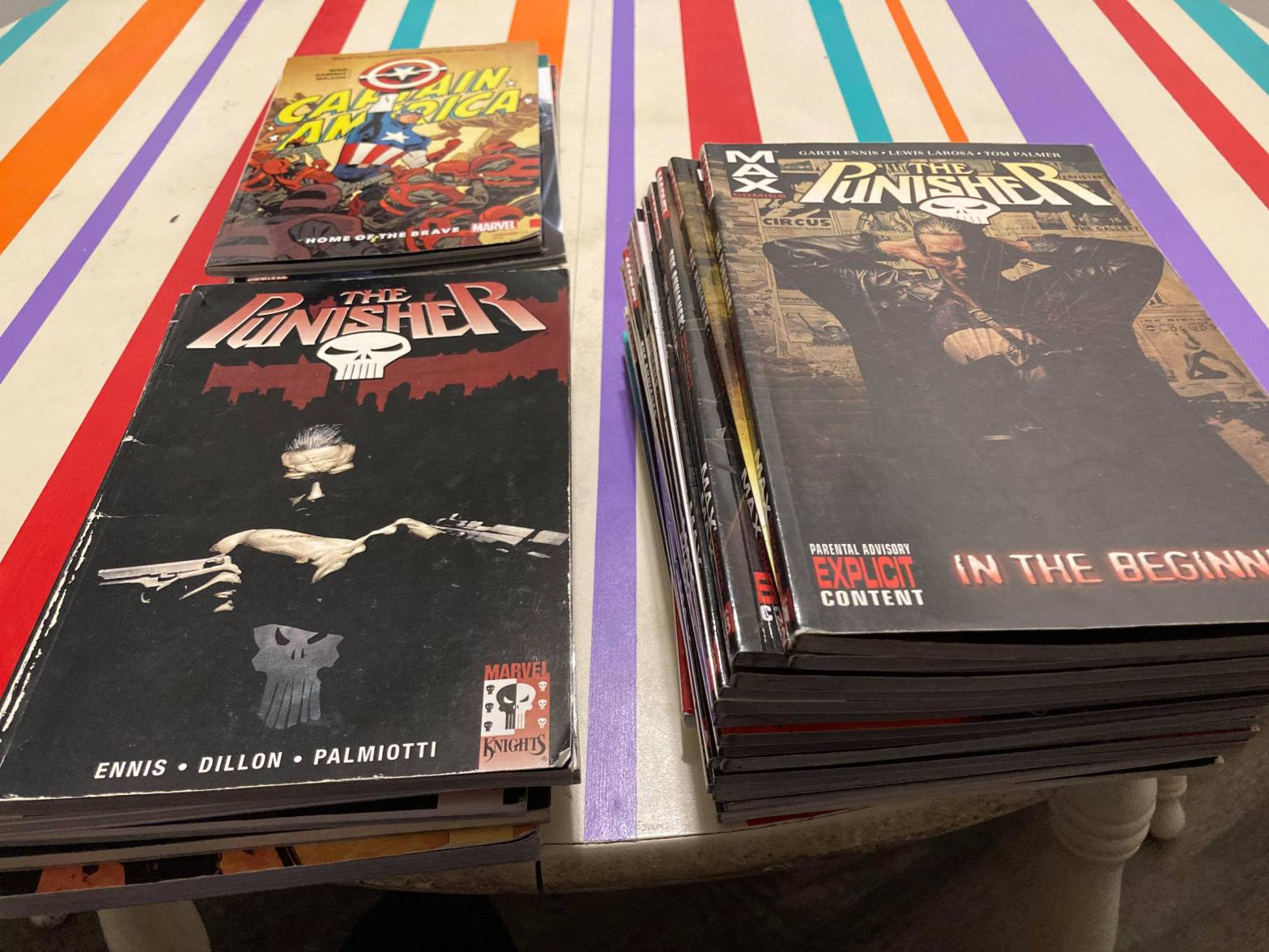
I wonder how many hobbies start by accident or on a whim? This was certainly the case for me. I remember reading my first volume of comics like it was yesterday. It was October 2013, and close to Halloween when I got hold of my first volume of comics: Welcome Back, Frank, a 300-page graphic novel starring the Marvel Comics vigilante/antihero known as the Punisher, one of my favorite characters. But I had no intention of buying it at first. I was merely going to buy Punisher Warzone on Amazon since I wanted to watch a good action flick. But curiosity got the better of me, and I bought the comics as well, since the volume was under $15, and there was a deal on Amazon to buy both the comics and the movie for a cheaper price than normal. Now I know how Jeff Bezos makes so much money, haha. Suggestion selling is a genius marketing tactic!

Welcome Back, Frank (2000 Punisher series)

The $15 I spent on my first volume of comics turned out to be an amazing investment, because it was the first comic book I’d ever read in my life. And it opened me up to a whole new world by how fun to read it was! For anyone who likes stories with action-packed plots, black humor, and fantastic artwork, Welcome Back, Frank is like candy. It’s addicting. I couldn’t put it down, and I blew through the 300+ pages in only a few days! After that, I was hooked. I knew I had to buy more volumes of that Punisher run under the Marvel Knights imprint, so I could continue following the story!

By Christmas 2013, I had bought volumes 1-4 of that Punisher story arc and blown through them all. I bought cheap used copies that I still own to this day, but as long as I was able to read the story I didn’t care.

Around Christmastime, I think I’m usually pretty easy to buy for. If someone buys me Ohio State, Browns, Cavs, or Indians shirts or gear, I’m happy. But I remember putting Punisher vols. 5-8 on my wishlist. Being the comic newbie I was at the time, I didn’t realize how many different Punisher runs there are. There are literally dozens of storylines, from his first solo series in the mid-1980s up to more recent volumes published a year or two ago. Dozens of different takes, each by unique writers, artists and producers. I would compare different takes on the same character to be like different versions of the same type of beer or whiskey. They all are similar at their core, and fun to experience. But they’re also so different and unique too!

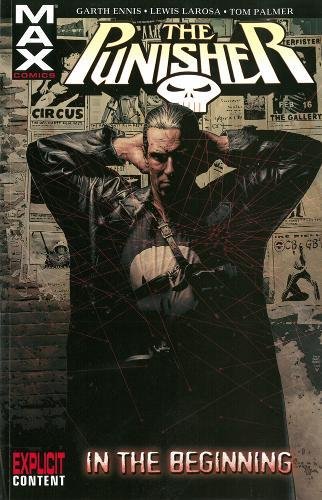
An inadvertent and well-meaning mistake Mom made that Christmas truly unleashed a monster though, haha. She bought me a few volumes of comics. But they weren’t from the Marvel Knights run like I was expecting. Instead I unwrapped volumes 5-8 of the Punisher MAX run, a dark, realistic and gritty take on the Punisher. Marvel Knights’ version of the Punisher was like a PG-13 version of the character. Punisher MAX? A hard R-rated version you’d hide in a locked and chained safe, away from the prying eyes of impressionable, innocent youngsters.

She thought I would be disappointed as soon as I saw them. She knew they were the wrong ones and felt bad. But I didn’t care in the least. I was hooked! I had new comics, new stories to read, and I was happy because it was the thought that counted. Thanks, Mom 🙂

Punisher MAX #1: In the Beginning (2004-2006 Punisher series)

I never did finish collecting the other series once I started reading Punisher MAX, haha. It was that good! In the old series, Frank would team up with superheroes like Spider-Man and Wolverine to take down supervillains. In the MAX run he’s a lone vigilante, a grizzled and aging Vietnam vet who takes down real-world crime organizations such as the La Cosa Nostra (Italian Mafia), Irish Mob, Eastern European gangs, Yakuza (Japanese Mafia), drug kingpins, child abusers and sex traffickers. I think I enjoyed that version of the character more because it was closer to what you’d see in real-world situations.

I try my best to be a decent man, love others and do the right thing. I am a Christian. But I am also human. I’m a fan of the Punisher, because he serves justice to the worst people in society. He deals with truly bad people in the comics the way we sometimes wish we could deal with them in real life. He reacts the way many of us would if we lost our family to thugs. It would certainly feel natural to want vengeance if someone took my family from me, even if God warns against it.

But reading those kinds of comics from time to time, even if they are dark and violent, serves as an escape. It’s cathartic. Therapeutic in a way. It allows me to release strong or dark emotions, while also enjoying the action in the story like someone would if they were watching an action thriller.

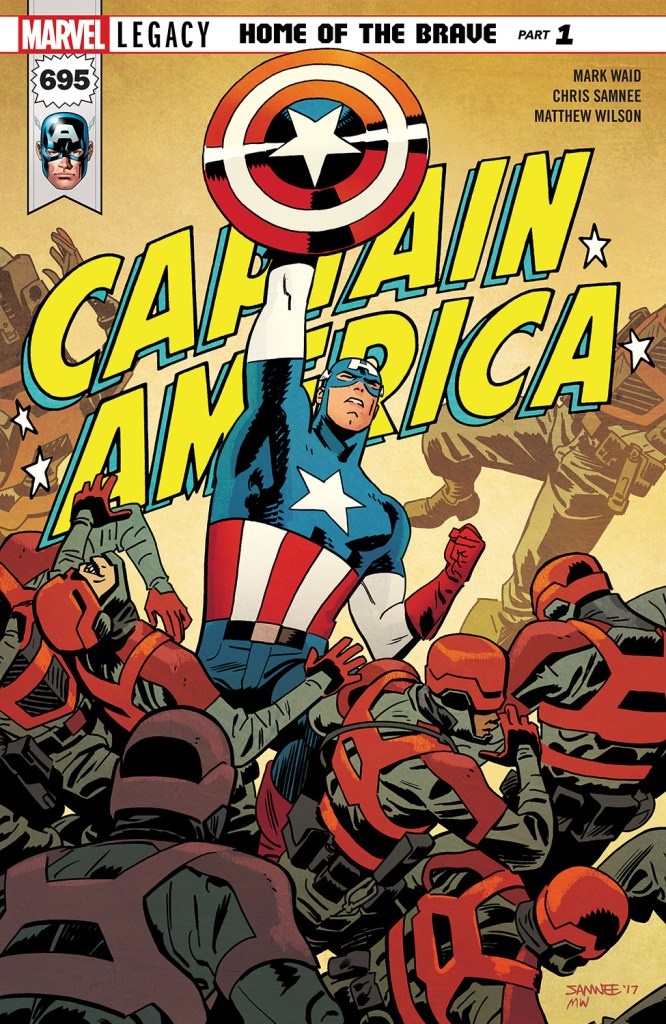
I also have more lighthearted Captain America comics, although the messages in them about patriotism, and what it truly means to be an American are powerful, and extremely relevant to today’s world. As is the interesting and timely storyline in the Marvel Civil War arc. Everyone has seemingly taken sides on the vaccine in today’s world. Just as every superhero takes a side for or against The Superhero Registration Act. It’s a study on how NOT to handle things when interacting with someone who has fundamentally different views of the world from our own.

Captain America: Home of the Brave (2017 series)

Comics either allow us to escape to another world, full of action or relaxation. Or they sometimes mirror who we are as people, or who we aspire to be like. Comics also give people something such as a character to identify with. Like I identify with Captain America for his patriotism and love of country, and Spider-Man for his pure heart and desire to help others. In those characters, I see inspiration for how I should strive to be as a person.

Some comic characters might also serve as inspiration for people who want to be proud of who they are, like Black Panther for African Americans, or the X-Men for the LGBTQ community and anyone who feels like they’re a societal outcast or misfit looking for a place to belong.

Collecting the stories of characters such as these, is like collecting pieces of the human experience. There’s a type of comic out there for everyone to enjoy, and I would encourage everyone to collect and read comic books they find interesting. It’s fun! As for me? I need to finish reading Punisher Noir, the latest addition to my collection. I’ve piled up a 26-volume stash over the last eight years, and plan on adding new comics for the rest of my life!

Cleveland Indians: 1915-2021

I knew this day was coming sooner rather than later. But now it’s official: After this season, the Indians are no more. Starting with the 2022 season, they will officially be known as the Cleveland Guardians. I don’t really know what I feel other than sadness. The changing of the team name signifies so much more than just “moving forward” to me. Even though I wasn’t an Indians fan as long as other people, the changing of the name represents the wiping out of nostalgic memories many have shared at the ballpark with their families and friends.

If I go to a “Guardians” game in the future, I won’t be reminded of past nostalgic and fun memories of my team, the Cleveland Indians. I will instead be reminded of the sweeping wave of political correctness that has this country in an iron grip. Chief Wahoo and the Cleveland Indians were just another pair of inevitable casualties. They were small speed bumps on the road to progressive wokeness. This was merely done so a small, powerful, vocal group of people can feed into their false moral superiority complex. They need to feel better about themselves without really having solved any serious existential problem.

Am I bashing everyone in support of the name change? Absolutely not. I’m sure everyone has their own reason for supporting it, and I completely respect their opinions. But I know this was driven by people far above simple protests at the ballpark. It’s simply a small instance of hollow political correctness winning out amidst a huge worldwide agenda. For that reason, I bristle at the name change. I chafe at it.

The second reason I am against the name change was a voiceover Tom Hanks did for the new Guardians name. I greatly respect his abilities as an actor, and I would hope he’s a decent human being when the cameras aren’t rolling. But as the time has passed, in my mind he has become inextricably tied to the Hollywood machine. He’s not even remotely a Clevelander or Ohioan. He briefly lived here as an up and coming actor. He’s part of a group of elites who look down upon those of us who don’t share their worldview. I’m a prime example of the people they preach and pontificate to. Yes, I did go to a left leaning college at Kent State. And I am more clearly able to see and understand left-wing points of thinking, whether I agree with them or not. But after all of my formative experiences, I am still me: A farmboy who absolutely cannot stand those who talk down to everyone else. Arrogance is my number one pet peeve.

The voiceover also seemed like a weakly veiled attempt by Indians/Guardians owner Paul Dolan to convince those of us who are unhappy or angry that this is for the best. And he’s appealing to the Hollywood machine to do so. This is a purely political move, and the man isn’t brave enough to say so, even though I’m sure he knows what’s going on. He’s wrong, but he ain’t stupid. After all, he was squeezed by MLB to get rid of Chief Wahoo ahead of the 2019 All-Star Game in Cleveland, and he caved. This is simply more of the same.

I guess what upsets me the most isn’t that the name is changing. It’s why it’s changing, and what it represents. The name change is merely a tiny drop in the ocean of a disingenuous agenda. The whole thing seems insincere and phony to me. The agenda may seem benevolent on the surface. After all, who could possibly be against social justice, inclusion and progress, right? But if the name change, and other things like it are truly done in the name of those ideals, how come when people are upset, they’re coldly told to “get over it” or to “get on the right side of history”? Responses like that reek of a superiority complex to me. And treating people like that only makes those who are upset or angry dig their heels in and fight harder.

We have so many other problems as a nation. Shady voting practices. A true border crisis. Higher ups in education teaching kids what to think instead of how to think. An administration slowly killing this country by spending trillions of dollars in just six months. Washington cracking down on speech they don’t like on social media. And divisiveness and hatred like I’ve never seen before in my life. Not one of those problems has been fixed. Not one iota. But we can feel fantastic as a nation for removing supposedly offensive team names.

Forgive the dark example folks, but I don’t know how else to put it. Removing a team name is like trying to cover a stab wound or bullet hole with a Band-Aid. Our country is being slowly killed with so many very real problems that we’ve done absolutely nothing about. Yet we slap on the Band-Aid in this particular situation, so we can feel good about ourselves for having done something surface-level and symbolic. Yes, racism is a real problem in this country and all over the world. But this isn’t even remotely how to fix it.

In the meantime, I may or may not follow the “Guardians” next season. If everyone else wants to, great! Go for it! But it’s gonna take me a while to get used to this one. It’s much deeper than a name change for me and many others. The Cleveland Indians are always going to be my baseball team. Go Tribe.

Midway: High-Flying Thriller!

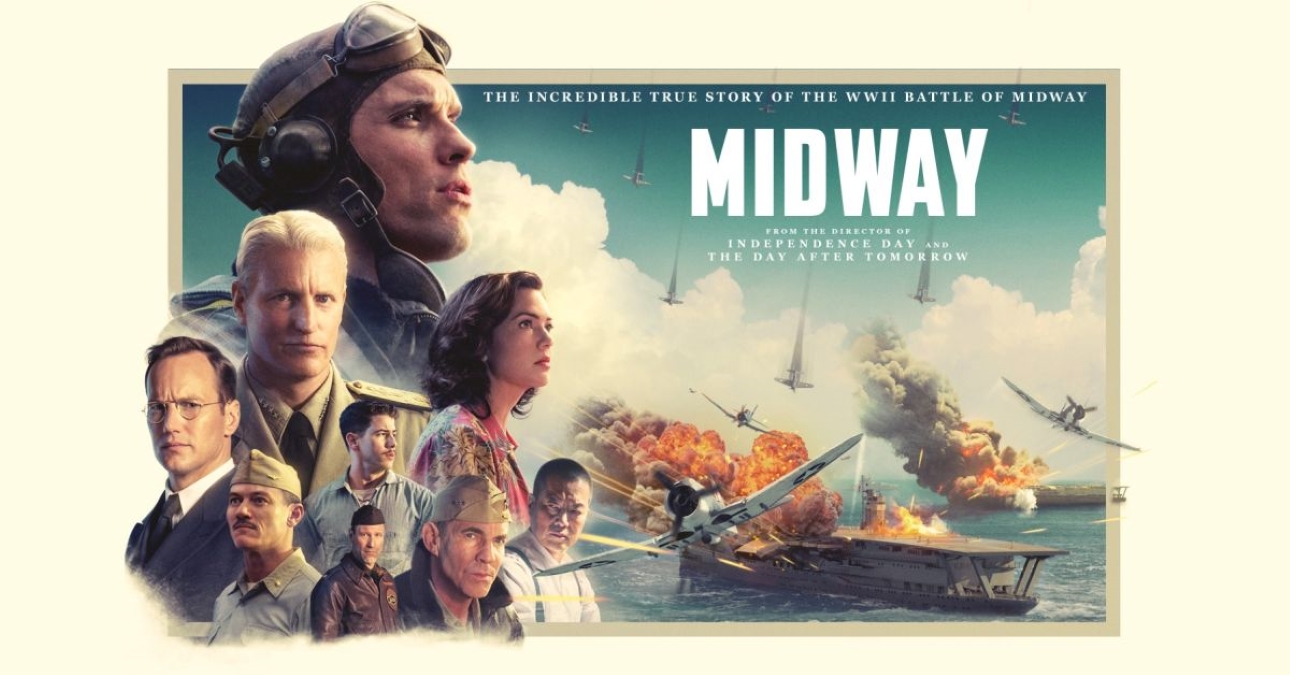
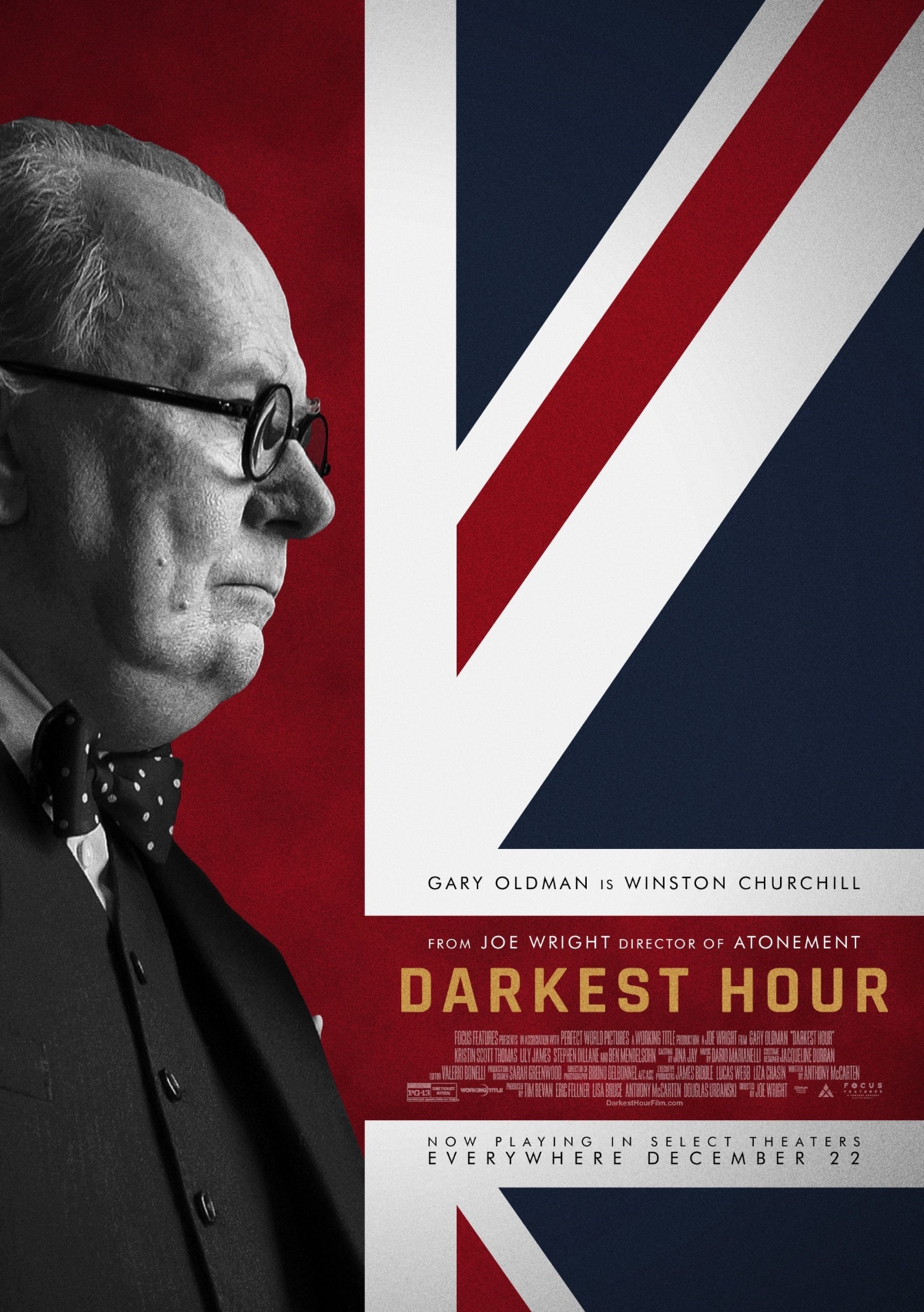
A few days ago, I watched Midway for the first time. I wasn’t sure what to expect. But now after watching it for the third time in less than a week, I can definitely say it’s one of my new favorite history movies along with Downfall and Darkest Hour.

I’ve never really given much thought to what it must’ve been like to fly a Dauntless, Wildcat or P-51 Mustang during World War II. But Roland Emmerich was a master at not only putting the audience in the pilot’s seat, he also did a great job at capturing the feel of how intense and dangerous the combat was, along with what the mood was among many American fighter pilots during the war.

At the start of the film, the recreation of the attack on Pearl Harbor definitely woke me up. I couldn’t imagine being a sailor on deck that Sunday morning in Oahu. They were minding their own business with their shipmates and friends, enjoying the beginning of what they thought was going to be a peaceful December day. They must’ve thought the huge squadron of planes heading toward them was friendly…until they started divebombing and torpedoing everything in sight!

I understand this is a movie, and creative liberties were probably taken at certain points to enhance the gravity or weight of everything. But in my case watching it, it definitely did what it was probably supposed to do: Make me remember the nearly 3,500 American sailors wounded and killed that day, and set the stage for a group of young fighter pilots eager to do what the entire country wanted to do at that time: Get revenge on Japan.

The Key Players

The portrayal of the pilots and sailors we get to know throughout the movie was another strong point of Midway. Ed Skrein heads a solid cast. He portrays Richard Halsey “Dick” Best, a divebomber from New Jersey. He’s loud, brash, funny at times, yet tough as nails when he has to be. Not to mention he’s got antifreeze in his veins. But I suppose bomber pilots had to be that way…especially when they’re flying into a hail of bullets from Japanese AA guns while bombing ships up close and personal!

Other important figures portrayed in the movie include:

  • Clarence Dickinson (Luke Kleintank), Dick Best’s friend and fellow bomber.
  • Wade McCluskey (Luke Evans), a flight instructor and fighter pilot. One of Best’s superiors.
  • Bruno Gaido (Nick Jonas), Machinist Mate First Class.
  • William “Bull” Halsey (Dennis Quaid), Fleet Admiral.
  • Chester W. Nimitz (Woody Harrelson), Fleet Admiral and Commander in Chief of the U.S. Pacific Fleet.
  • James Doolittle (Aaron Eckhart), fighter pilot, known for the famous “Doolittle Raid” where he led a mission to bomb Tokyo.
  • Edwin Layton (Patrick Wilson), a U.S. Pacific Fleet Intelligence officer who worked to crack Japanese naval codes.
  • Joseph Rochefort (Brennan Brown), a Radio Analyst who works with Layton to crack Japanese naval codes.

Midway was really strong in not only showing the distinct personalities of these men, but also showing the role they had to play in our eventual victory in World War II. Roland Emmerich constructed everything in such a way that the movie fit together like a puzzle. What one key player did directly affected, or helped the other key players to do their jobs. Midway definitely showed the teamwork involved in winning the war in the Pacific. Plus every key personality was fleshed out enough that I feel like the actors could reprise their roles in spinoff movies. They were that good, in my opinion!

I know Midway likely won’t get any spinoffs or sequels. But if the studio had wanted to, they could’ve made spinoffs to Midway. Perhaps one showing the Doolittle Raid, another showing more of Nimitz’s and Halsey’s leadership within our Navy, and one showing Layton and Rochefort cracking the Japanese naval codes along with other intelligence operatives. If a movie was ever made similar to the style of Midway, but with Layton and Rochefort as the stars, I imagine it as kind of like a Zero Dark Thirty film with a World War II twist. I’m sure the intelligence work was extremely interesting!

Tireless and tenacious intelligence work often gets overlooked in the midst of huge ground, naval or air victories. Generals, Admirals and Commanders get the glory for winning battles and wars. They should. They should always be honored along with their troops. But without top notch intelligence, every big military operation in history would’ve stayed stuck in neutral. Nothing would go anywhere.

“This is for Pearl!”

My favorite scene in the entire film though, had to be this one:

Everything about this scene was just awesome. The tense music, the chaos of the battle, and Dick Best letting out a primal scream after dropping the bomb to sink a Japanese carrier. How much more badass can it get?! The scene definitely seems Hollywood-ized, but that’s not the point of it. I think this scene was used to show how Dick Best and so many others felt about Pearl Harbor, which I completely understand and agree with. I felt the same way after 9/11.

No matter how fractured our country seems at times, if we’re shocked or shaken by a common enemy that wakes us up like with Pearl Harbor or 9/11, we take a second or two to let it register. Then we get angry and all unholy hell breaks loose once the sleeping American Giant wakes up. Like one of my favorite songs says: “We may have done a little bit of fighting amongst ourselves. But you outside people best leave us alone!”

Overall, I thought Midway was fantastic! I’ve definitely gotten into the habit of watching war movies lately. Maybe I should check out Fury, 1917, or Dunkirk next? But I would definitely recommend Midway to anyone who likes action movies, and is a student of history. Jump into the copilot’s seat with Dick Best and the others. You won’t regret it!

Parable of the Tenants: A warning to the world

For those of you who have followed my blog from the beginning: Thank you. You know I don’t write unless I feel truly moved to do so. This is definitely one of those times. I just finished listening to The Parable of the Tenants in Chapter 12 of Mark, and was instantly jerked awake. I literally got chills, and felt that God was trying to tell me something. The Parable of the Tenants, not to be confused with The Parable of the Talents, is in Mark 12:1-12. Before reading more of this post, take a moment and read the parable here.

Before I listened to this parable, I genuinely asked God in my heart to help me see whatever it is that He wants me to see, if anything. And boy did He! Usually I listen to or read chapters of Scripture expecting to learn, or write something down to remember. But every once in a while, God smacks me in the face! Most of the time, those rare “Godsmacked” moments are joyful, peaceful and deeply profound. They sometimes even move me to tears!

This time though, God’s message to me seemed ominous. Like He was not only warning me, but the rest of the world. Especially when we ridicule, mock, hurt or kill those who tell the truth that is the Gospel of Jesus Christ.

Right away, I understood that the vineyard owner in the parable was God. Next, I understood each servant the vineyard owner sent to the tenants, to be any voice of truth that preaches the Gospel. These voices were the Old Testament Prophets, Jesus Himself, and any true Christian who walks the Earth today.

In the parable, what is the reaction to each of the servants the vineyard owner sends? They’re beaten or killed. What is the reaction to the son of the vineyard owner? He’s beaten and killed. To me, this represents what happens when the world receives a person who tells the truth that Jesus preached, taught, and literally embodied while He walked this Earth.

The world hates the truth. It doesn’t want to hear it. Or if it does, it only wants to hear the sunshine and rainbow, peaches and cream parts that it likes. This was as true in first century Judea, as it is in our 21st century world. The world likes the “Buddy version of Jesus” as long as he doesn’t rock the boat. Society likes the timid, agreeable Jesus that can easily be shuffled into the background if he offends somebody. The “Jesus” they know apologizes and meekly saunters away into a quiet corner. Their “make believe Jesus” is only allowed to step out of that corner when they want to hear something that makes them feel good. I don’t know who THAT “Jesus” is, but he’s certainly not the Jesus I know and love with all my heart. Society’s “Jesus” is a weak, spineless imposter!

What happens if someone shares the real, authentic Jesus? If they share the radical, sometimes fiery and controversial man who seems to delight in stepping on toes and stirring the pot, our secular, largely godless society puts its fingers in its ears when exposed to Him. As a result, when someone tells the whole truth of the Gospel, they may lose friends, be openly mocked, physically hurt or killed.

At the end of the parable, a chilling warning is given: What will the owner of the vineyard do? He will come and destroy the tenants and give the vineyard to others. Have you not read this Scripture:

“The stone that the builders rejected has become the cornerstone; this was the Lord’s doing, and it is marvelous in our eyes”?

We often scoff at the truth. I certainly have at times. It’s not always easy for us to hear and obey what God tells us through Jesus. The world often brands the people who share the Gospel as “crazy,” or “dumb.”

But the day where the vineyard owner finally returns to settle things with His tenants is coming sooner than you think. It will be upon us all without warning. Which group of tenants will you find yourself in on the last day? Will you be among the righteous ones who have done the will of the vineyard owner, or in league with the bad tenants who have rejected the truth of Jesus? Choose wisely!

Darkest Hour: Bringing Churchill to life

I have always been a student of history. Something has always fascinated me about the subject. I was fascinated by it as a child and teenager, and I have come to love and respect it as a grown man. I believe we need to know both history’s greatest triumphs and darkest tragedies, and take their lessons to heart. For if we know how things have played out in the past, it’ll help us make good decisions which will lead to a bright and prosperous future for ourselves, and our children after us.

I have also been inspired by a great number of historical figures for their courage and determination in the face of seemingly hopeless odds. Few seem to embody that courage, grit, stubbornness and never say die attitude as much as Sir Winston Churchill. I don’t know if he would appreciate me calling him this, but I always call him the British Bulldog. When everyone around him was ready to throw in the towel and negotiate for peace with Hitler in May 1940, he relentlessly stood his ground, he dug in and was stubborn like a bulldog! Gary Oldman was absolutely superb in bringing him to life in Darkest Hour, one of my new favorite historical movies!

Who was Winston Churchill?

Before I watched this movie, I admittedly did not know much about Winston Churchill beyond what I was taught in history class, in that he was our country’s greatest ally and friend in wartime once we joined the fight in December 1941.

But now after having seen Darkest Hour, I have a whole new level of respect and appreciation for him that just wasn’t there before. That’s not to say I didn’t respect him before. I always have respected him. But Gary Oldman brought out his humanity, and that really resonated with me. Winston Churchill was more than just the top-hat-wearing, cigar-chomping, whiskey-drinking man we see in the history book. If this movie is historically accurate and true to who he was as a person, Winston Churchill was a passionate, emotional man who deeply loved his home country in the same way I passionately love my country!

He also resonates with me because of his kindness to the people, and his sense of humor. Particularly when dealing with pesky reporters constantly hounding him for any updates on the war effort. When one reporter kept badgering him about whether or not he thought Britain was losing the war, he abruptly stopped walking, wheeled around to face the man, and gave him a “backwards peace sign” that instantly offended him. After that, it was all over the front page of the newspapers!

This scene taught me a new cultural thing, and had me busting out laughing! Apparently the “backwards peace sign” is the British equivalent of flipping somebody the bird? Learn something new every day! But that’s not even the funniest part. I bet Winston did know what the gesture meant, and he did it anyway! That would fit into his sense of humor. From what I know of Churchill before and after seeing the movie, he strikes me as a man who wasn’t politically correct. At all. And he didn’t seem afraid to rankle a few people or ruffle their feathers if he felt they needed it, with humor or otherwise 😉

Qualities of a True Leader

In addition to showing Churchill’s humor, Gary Oldman was also an absolute master at conveying his mindset when it came to making tough decisions. It seems to me like he often felt alone in facing Hitler. After all, his people were terrified, and nearly every politician in his cabinet was more than willing to back down and bow to Hitler. It took balls for Churchill to truly stand up for what he felt was right. And history did eventually prove that he WAS right in not backing down.

But the most important thing with that part of the film, is that Gary Oldman nailed portraying Churchill in such a way, that I felt as if I were there with him during the times he was outnumbered. I empathized with him. I felt as if I were there in person, watching him spar with Lord Halifax and other members of his cabinet, over whether or not to give in to Hitler or continue fighting.

It also became clear to me that Winston Churchill was often the wisest and most aware person whenever he was in the room with his advisors. When they wanted to sue for peace, and truly believed that Hitler would be merciful and reasonable, he knew what kind of man he was REALLY dealing with. He saw what no one else could see. He saw the giant 800 pound “Nazi gorilla” in the room when everyone else either couldn’t see it, or willfully looked away.

“You cannot reason with a tiger, when your head is in its mouth!”

There were several sparring matches like this, with Winston often going against the others alone, until former Prime Minister Neville Chamberlain joined him, once Chamberlain realized that peace with Hitler was impossible. I couldn’t imagine the stress Churchill was under. He saw the Battle of Britain coming before it happened, and he probably felt like no one was trying to help him. At one point in the film, he is on the verge of tears while he is at home. He feels hopeless, scared of the oncoming battle, and frustrated at the lack of help he’s getting. But his wife, Clementine Churchill comforts him. After that, he seems reinvigorated and ready to go. Ready to stand his ground and protect his people. He did indeed stand his ground. Because of it, history smiles on him as a hero. He was a bulwark for the British people and the rest of the world against arguably the most evil man in history.

Man of the People

Lastly Churchill’s love for his people was shown in a powerful scene near the end of the film. From all I have heard, the scene itself is fictional. It supposedly never happened. But there is an element of truth in it. Apparently, Churchill would often disappear from the sight of his bodyguards or the people he was with…only to be found later, talking with the common person, and listening to their views whether he agreed with them or not. That is a leader. That is a true servant of the people. Something the politicians in Washington have not done in decades! The world needs more people like that!

Overall, I thought this movie was extremely well done! Darkest Hour has also inspired me to learn more about who Winston Churchill really was. Our society seems like it could use more people like him in leadership positions. He certainly was not perfect. He was a human being like the rest of us and made plenty of mistakes. But he was there when his country and the world needed him the most, said what everyone needed to hear whether they liked it or not, and he didn’t rest until Hitler and the Nazis were no more.

God Bless Winston Churchill!

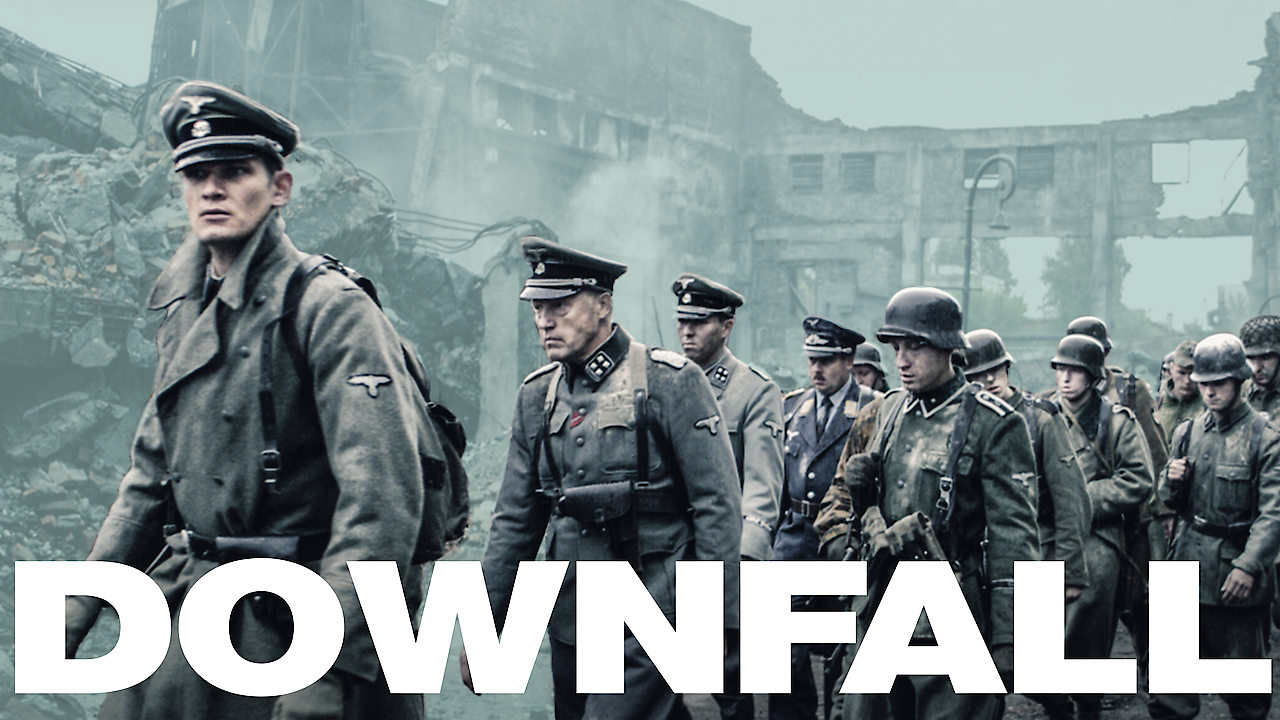
Downfall: A Tragic Classic

I have always been interested in studying history of any kind. But I’m particularly fascinated with political and military history. How certain people acquire power, the rise and fall of once mighty empires, and the strategies used by brilliant generals to defeat their enemies, has always been extremely interesting to me.

However I think many of us often don’t understand what it’s like living in the middle of all these things. It’s easy to be interested in something and study it when it’s years, decades or centuries in the past. The film titled Downfall, rips away any of that by placing viewers squarely in Berlin, Germany in the closing days of World War II. Most people may know Downfall from when the “Hitler meltdown parodies” were the biggest thing on YouTube back in the day.

But now after watching the film, I find it hard to laugh at any of those videos anymore. Downfall is a gritty, nasty, realistic film that should be watched only by people who think they can stomach it. I’m glad I watched it to be able to truly get a sense of what things were like back in 1945 Berlin. But it’s also one of those rare movies that left me feeling emotionally drained after watching it. It’s a brilliant film by director Oliver Hirschbiegel that was nominated for an Oscar, but I’m not exactly itching to watch it again anytime soon. Downfall attempted to recreate the final days of one of the darkest chapters in human history, and did so better than almost any film I’ve ever seen.

There were several things that struck me in the opening minutes of the film. I was awestruck by the absolute carnage in Berlin, and this is even before the Soviet army shows up to capture the city. Buildings were smoldering. The screaming whistle and explosion of Allied artillery was practically constant in the movie’s opening scenes. And there were more civilians preparing to fight the Soviets in the streets, than there were commissioned officers. Some of these people were teenagers and young children! While Hitler and his inner circle were hiding in an underground bunker like the cowards that they were, they left everyone to fend for themselves!

Another thing that struck me, was how Eva Braun was portrayed by German actress Juliane Kohler. At certain times throughout the film, Eva Braun often strikes me as disconnected from reality. But then again, she had to be disconnected from reality, and at least somewhat insane if she was romantically involved with one of the most evil men in history. The war is all but lost and the Soviets are slowly tightening their grip on Berlin by shelling the city day and night, yet she swing dances, parties, smokes, and seems to be enjoying herself. The crazy thing? I truly think that Eva Braun, Hitler, Joseph Goebbels, Magda Goebbels, and the other high-ranking Nazis in the bunker, thought they were going to be saved by some miraculous breakthrough.

What happens when they finally realize that nobody is coming to help them though, is an interesting study in human psychology and what the breakdown of the mind looks like. When the realization that they’ll all soon be dead finally dawns on them, they turn on each other like a bunch of piranhas. They eat each other. Hitler points the finger at his most trusted followers and brands them as traitors. Several generals begin fighting amongst themselves. The original scene of Hitler’s meltdown shows the moment when he finally realizes everything is over. It’s age-restricted but still available on YouTube. You can go to it from here.

Traudl Junge

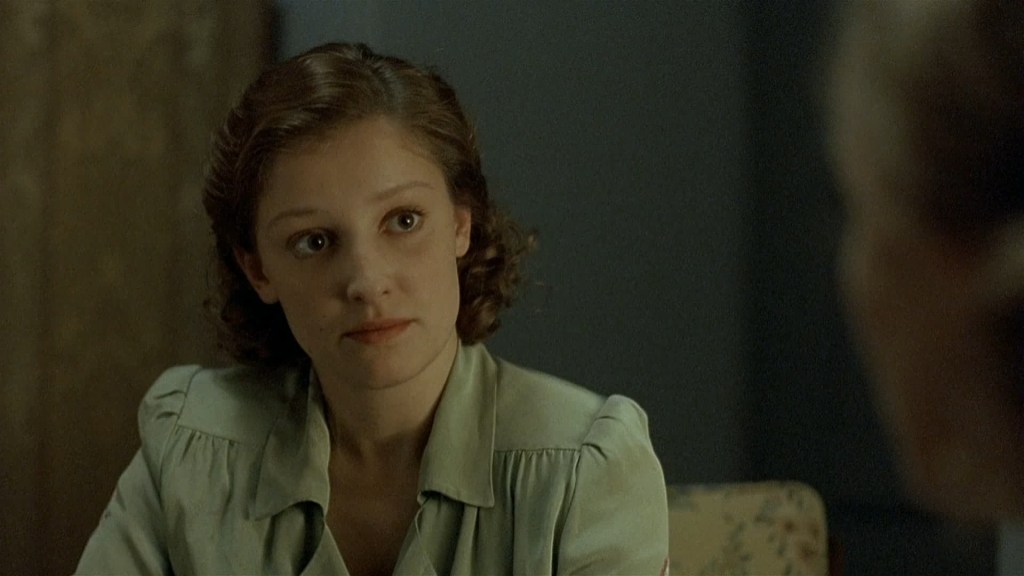
What happened in Berlin in late April 1945 is a powerful story by itself. But when historical people are portrayed by incredibly skilled actors, they bring an extra layer of weight and realism to what happened. German-Romanian actress Alexandra Maria Lara plays Gertraud “Traudl” Junge, Hitler’s personal secretary who was responsible for typing many of his messages and pieces of propaganda to the German people. She was brilliant in portraying Junge’s mindset during the film.

Alexandra Maria Lara as Traudl Junge

She originally was happy to serve Hitler when he first hired her as his secretary in 1942. She originally saw being his secretary as just a job. But towards the end of the film, we see her eventually start to come to terms with what she has done by helping him. She realizes that while yes, she wasn’t directly responsible for perpetrating suffering and death upon millions like many of the Nazi soldiers, she did contribute to a bunch of anti-Semitic and pro-Nazi propaganda that encouraged others to do those things. In the film’s closing credits, we see the real-life Traudl Junge admit that she should’ve known right from wrong back then, even at 22 years old. Traudl Junge seemed haunted by everything until her death in 2002.

Joseph and Magda Goebbels: The Couple From Hell

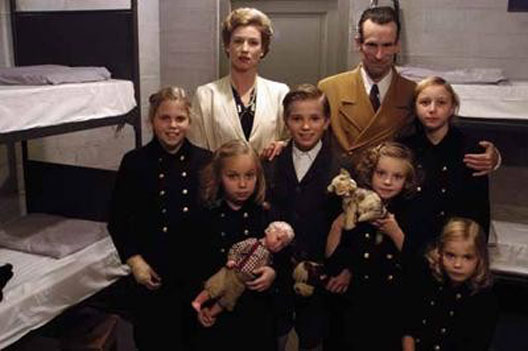
While Alexandra Maria Lara was brilliant as Traudl Junge, the portrayals of Joseph and Magda Goebbels by Ulrich Matthes and Corinna Harfouch, hit me harder emotionally. The portrayal delivered by Matthes and Harfouch showed me just what radical, blind devotion to evil looked like. Nothing came before their devotion to Hitler. Not morality. Not logic. Not reason. And especially not their six little children.

Goebbels Family in Downfall

I’m rarely shocked by anything I see in movies or TV nowadays. I’m probably desensitized to many things, since it’s the nature of American television, unfortunately. But watching the scene where Magda sedates her young children to knock them unconscious, and then having them bite down on cyanide pills, is one of the most gut wrenching things I have ever seen. I did not cry. I was too shocked to do anything but watch. It’s one of those things where you know what happens, but you hope beyond hope that it doesn’t. Seeing something like that just ate at me. It would eat at even the most hardened person. Little children are so innocent, happy and pure. They haven’t been changed or dirtied by an evil world. Joseph and Magda’s children never really got the chance to be children. They had no chance at a happy life when they were raised by a pair of murderers!

Magda’s coldness with which she murdered her own children, and Joseph’s demonic, near-skeletal look have forever been seared into my brain after watching Downfall. They were evil personified. They weren’t far off from the man they blindly devoted their lives to.

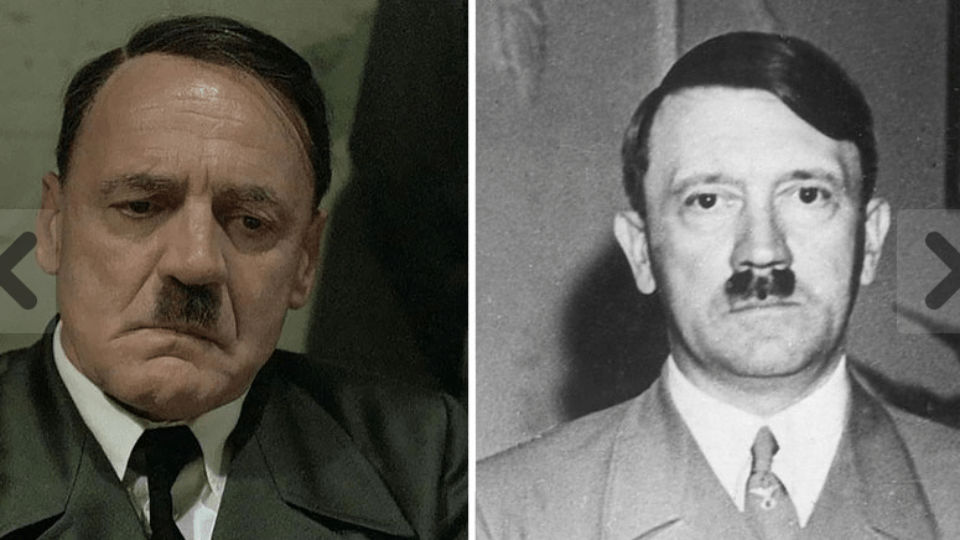
Bruno Ganz as Adolf Hitler: A Masterpiece

I wasn’t exactly sure what to think when I first started watching the film. Hitler’s story has been done so many times, and quite a few men have portrayed him onscreen. But Swiss actor Bruno Ganz blows them all away. His portrayal of Hitler was unsettling, jarring and scary at times. It’s like he’s a ticking time bomb. Prone to blowing up at any small thing said or done by anybody.

Bruno Ganz as Hitler

But aside from that, Ganz also portrayed Hitler as a very charming, charismatic man who could be nice to others when he wanted something. He was a master manipulator. But he was also an enormous hypocrite and the world’s biggest coward. Several times throughout Downfall, Hitler’s generals beg him to order an evacuation of Berlin so the people caught in the middle of everything can get out. What’s his response? “They deserve to die. We’re about to lose Berlin and the war because they didn’t fight hard enough.”

So much for truly loving one’s country and people. What Hitler believed and did was as wrong as wrong could possibly be. But I would’ve had at least a miniscule measure of respect for the man if he had taken up a gun, stood next to everyone else and died fighting. But he didn’t even have the balls to back up what he believed in with action!

It takes a special actor to play one of history’s most evil people. And not only to portray him, but to portray him accurately. I also saw an eye-opening quote from Bruno Ganz himself when I found out he portrayed Hitler in the movie, “I couldn’t get to the heart of who Hitler was, because there was none.” Wow…

Bruno Ganz is no longer around, since he died on February 16, 2019 from intestinal cancer. But I will always believe he deserved an Oscar for this film.

A new perspective after watching Downfall

It may have been 3-4 days since I’ve seen Downfall. But it’s a movie I won’t soon forget. And with it, I have developed a new perspective. I realize just how truly horrible war is, and how utterly devastating World War II was. Anywhere from 50-73 million people were wiped off the face of the earth from 1939-1945. Including six million Jews, along with millions of other people the Nazis saw as “inferior” or “undesirable.” If I had lived in Europe or Nazi Germany back then, I would’ve been one of them. I would’ve been sent to the gas chamber for having Cerebral Palsy.

Along with this sobering look at everything, a new kind of anger has awakened inside me. Not at the Nazis, or the Holocaust deniers (although I AM angry at them). No, after watching Downfall, I realize just how clueless, heartless, and downright stupid people are when they call Trump “Hitler.” Or when they brand Conservatives “Racist” or “Nazis.” I dare every single person in that group to watch Downfall all the way through without looking away, and say those things with a straight face afterward. That is if they have the stones to even watch the film. I guarantee you they don’t!

The amount of hatred someone has to have in their heart to label someone else a “Nazi” is staggering. And it’s probably not far off from the level of hatred shown by the REAL Nazis back then! Every time these terms are tossed around like they mean nothing, they’re an insult. They’re an insult to good, sensible people. The people using them don’t realize just how dark history was back then. And every time they use those terms, they’re slapping every Holocaust survivor in the face, and pissing on the graves of those who weren’t fortunate enough to make it out alive!

I recommend that everyone see Downfall all the way through at least once in their life. Yes it’s dark, ugly and depressing. But I believe if more people saw it, they would do everything in their power to make sure nothing as dark as Nazi Germany ever happened again!

Living and Loving Sacrificially

It’s probably all too easy for all of us to forget to love sacrificially at times. Human intent naturally seems to be selfish. Living for numero uno comes naturally to us. But the Bible verse I was shown this morning reminded me that I need to live the opposite way. Hebrews 13:16 says:

And do not forget to do good and to share with others, for with such sacrifices God is pleased.

I like when Bible verses or passages make me think of how I can apply them, or put them into action in my life. I get legitimately excited when I can DO something and live an active faith! I love learning wisdom from the Bible that I can commit to memory, but I love even more when I can put something I learn into action. Take a few seconds to think of ways you already live sacrificially, or think of ways you can live sacrificially. We are all busy people. But no one is ever too busy to show the sacrificial love of Jesus with acts of kindness.

Two ways I try to live sacrificially in my own life situation, is by donating either my time or money to the local homeless shelter here where I live, or by taking the time to write blog posts such as this, so others can hear of the Good News of Jesus. I enjoy doing it for all of you, but it takes a little time and energy to put these out. On days like today where I know He wants me to say something, I listen to Him. I choose to let myself be an instrument through which He can speak if He chooses to. I’m just a tool though. Nobody special. I also enjoy living sacrificially when I do something nice for others as a surprise just to see the smile on their face! Their happiness is enough 🙂

A Mother’s Sacrificial Love

But my examples are just small, everyday examples. They are insignificant compared to the sacrificial love a mother shows her children. I don’t think it’s a coincidence that this particular Bible verse showed up the day after Mother’s Day, the day we celebrate all that our mothers do for us. I think God wanted me to speak on this. A lot of the celebration of Mother’s Day honors and recognizes deep, sacrificial love. Selfless love. A love only a mother knows. My mother Stacy Wickiser, is a great example of what it means to live and love sacrificially!

I can only imagine how much love and selflessness it takes from a mother to raise a physically normal child. Let alone one born with Cerebral Palsy. But that was the situation my mom found herself in 30 years ago. She, like Dad, was definitely scared and uncertain once I was diagnosed with my condition. She could’ve treated me differently. She could’ve seen me as a burden. She could’ve given up on me in any number of ways. But she did not think of any of that for a second! All that mattered to her was giving me the best quality of life she could possibly give me. And she still thinks this way even now!

My Mother, Stacy

She worried about me as a baby, like any good mother would. When I was a toddler and little boy, she took me to therapy to learn how to walk and live with my condition. 90 minutes a day driving me there and back, along with hours of watching over me as the therapists worked with me to improve how I was doing.

As I grew from a young boy into a teenager, there were two surgeries on my legs so I’d be able to walk properly. And both times, she was there for me while I was in pretty rough pain during 6-8 weeks of recovery. If the pain got so bad I cried, she was extra gentle with me. When the time came for me to return to school, she went out of her way to make sure all my classes were accessible while I recovered in my wheelchair, and so I could see my classmates and friends.

As I grew from a teenager into a man, there were countless times where she’d drive me up to Kent State and back, or do my laundry on the weekends I was home. She asked for nothing. And later on she worked as a housekeeper at the University of Findlay, so I could pursue a Master’s Degree that was virtually free because she’s a University employee. I know children like to brag that their mothers are the best. But I have yet to find a greater example of sacrificial love in my own life than my Mom.

Mom, if you’re reading this, thank you. Thank you for living a sacrificial life for Christy and I. I apologize for the times I have lost sight of all you’ve done and for when I have been ungrateful. I would not be where I am today if it weren’t for your love and guidance. I love you always, no matter what!

The Greatest Sacrifice

There is only one greater example of sacrificial love than that of a mother for her children: The love Jesus Christ showed for us all when He willingly went to the Cross to pay the price for our sins with His own blood. It’s the greatest example of sacrificial love in all of history, past, present and future. Forevermore.

Jesus sacrificed everything. He sacrificed more time in Heaven with God. He left the comfortable, unimaginably beautiful Paradise where He had lived with His Father and countless angels. He came to this sinful world as a helpless baby, and grew up poor in the tiny little town of Nazareth. As a grown man, He endured 40 days of temptation from the Devil in the desert. He could’ve thrown in the towel then, gave up, and said “You know what, screw this I’m going home! It’s too hard!” But He didn’t do that. He endured His trials.

He knew He would make enemies with the religious authorities of His day, and with the Romans. But He sacrificed there too. He sacrificed the comfortable life He could’ve had as a wise rabbi with a wife and children if He had kept quiet and didn’t rock the boat. But He chose to live as the only truly holy and sinless example of grace, love, fearlessness, and absolute truth there has ever been in human history. And then He willingly endured the most painful death imaginable on a Roman cross on the outskirts of Jerusalem. He did all this out of a sacrificial love that cannot be measured, and never will be measurable by our human standards!

In today’s selfish society, I will strive to remember that I should live selflessly and sacrificially, and then look for ways to live like this. I encourage you all to do the same in your own lives. For if we do this, we become just a little bit more like the Lord. And hopefully He smiles on us 🙂

Leprosy and a Miracle

I’ve slowed down reading Scripture a little bit compared to the pace I started with. I’m just gonna say it: food regulations, rules for sacrifices, and rules on cleanliness aren’t as interesting as the story of Joseph or Moses. But the Bible is from God, and in order to know Him better, I have kept going as best as I can, even though the middle of Leviticus is very dry and repetitive. But boy am I glad I kept reading!

Leviticus 13 describes how a priest examines people for skin diseases, and what a person who has leprosy, a sign of uncleanness, must do. I tried to focus on reading the chapter as best as I could, but you know what I thought of the whole time? Jesus healing the leper. I meditated on His miracle as I read the chapter and what it meant.

As I got to the end of the chapter, the last two verses broke my heart. Leviticus 13:45-46 says:

“Anyone with such a defiling disease must wear torn clothes, let their hair be unkempt, cover the lower part of their face and cry out ‘Unclean! Unclean!’ As long as they have the disease they remain unclean. They must live alone. They must live outside the camp.”

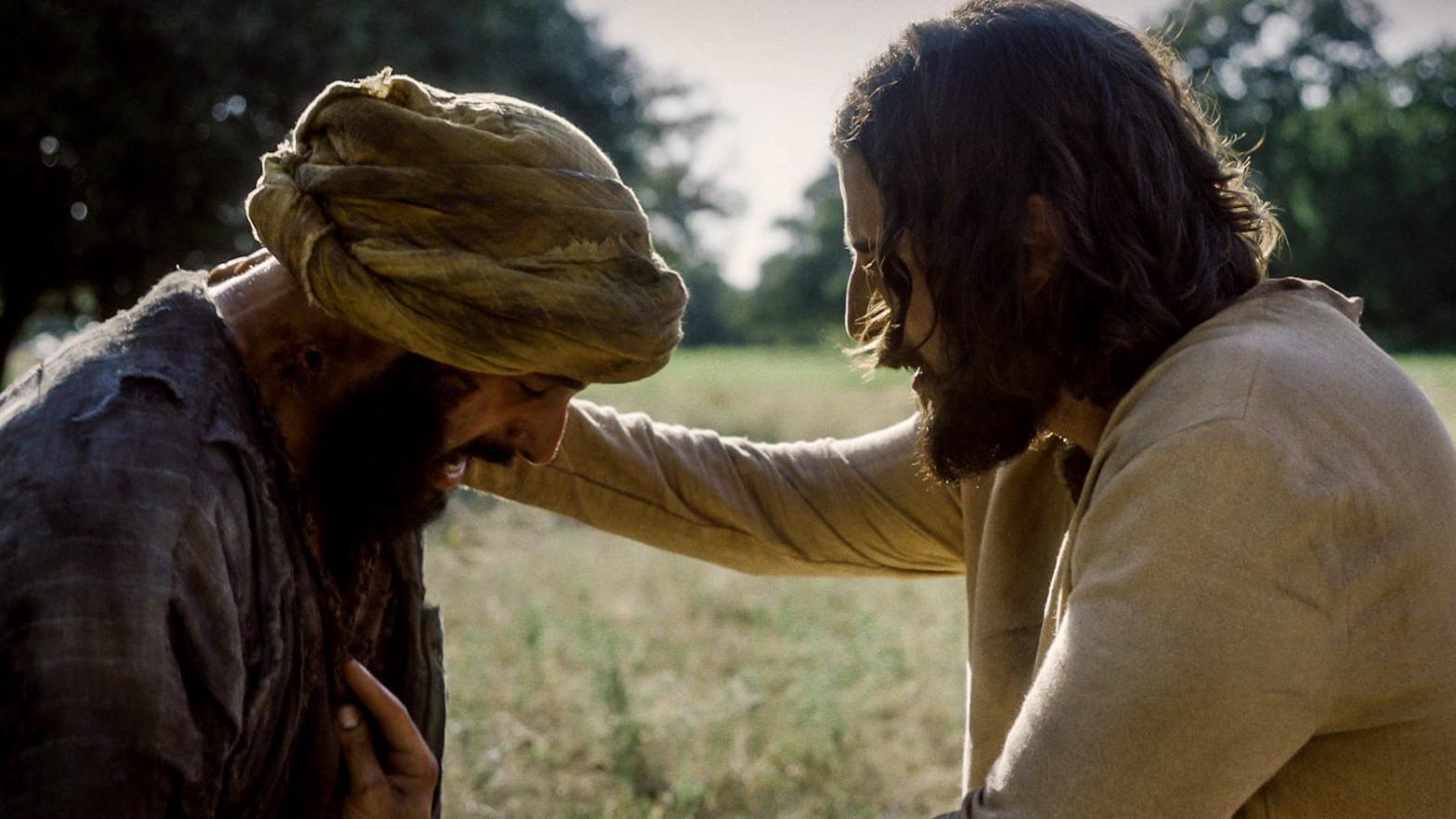
I tried to put myself in the shoes of a leper. Imagine being separated from your family, friends and loved ones, with no hope of ever being accepted back into society. That would be an awfully hard, lonely life. Plus I’m sure the stigma of leprosy also caused the people in the days of the Israelites to view lepers as cursed by God. And if a leper shouted “Unclean! Unclean!” as they walked along, it was probably an invitation to be made fun of or ridiculed. Knowing this, it made the miracle Jesus performed nearly 1,500 years later, that much more powerful and beautiful. Although I’ve seen several versions of the miracle portrayed, this is my favorite one:

That scene always has me choked up or in tears. Imagine how lonely that man must’ve been before he met Jesus. He may have wandered alone for days, weeks, months, or years. And at the same time imagine his indescribable joy after he was healed! Jesus showed how radical and unending His love is. He was willing to go to a person society considered the lowest of the low, and not only heal him completely, but restore his place among the people.

Things to learn from Jesus’ miracle

After reading Leviticus 13, and connecting it to Matthew 8 (which is where the above scene in The Chosen is taken from), I definitely had questions. I wrestled with what it meant other than Jesus loved the leper enough to heal him. Those who aren’t Christians but well versed in the Bible and the Torah will say that Jesus violated a Levitical law on cleanness by healing the leper, which is committing a sin.

But Jesus did not violate any law, nor did He sin. Rather, He revealed God’s character in that instance: That He loves the people who society shuns and looks down upon. I still struggle mentally with reading Leviticus 13 and then Matthew 8, because they seem contradictory. Why would God give these laws on cleanliness, and then heal a leper 1,500 years later? I still don’t entirely know the answer to that one, and I am not going to claim that I do. This is where faith comes in 🙂

This is just my take, so take it with a grain of salt. But I believe this was an instance of God teaching us that we should have a heart like His, rather than be legalistic. And He shows us this several more times throughout the New Testament. By healing the leper, Jesus fulfilled the heart of God’s law rather than the letter of it. The heart of God’s law is love.

Jesus also did two other things by healing the leper: Reward the leper’s faith, and provide a MASSIVE clue to His ultimate identity as the Messiah. The leper had never personally met Jesus before. He had no reason to believe He was a miracle worker. He had only heard from somebody else about Him. But yet he had enough faith in his heart to say, “Lord, if you are willing, you can make me clean.” He addressed Jesus as Lord because in his heart, the leper knew who He was. The leper had faith and trusted in Him.

Which brings me to the last thing I learned: By this miracle, Jesus showed in just one of many ways that He is the Messiah and God incarnate in the flesh. This was just one in a series of seven major miracles He performed that are recorded in the New Testament. They’re big flashing neon signs pointing right to Jesus as if He’s saying, “I’M RIGHT HERE! YOU CAN’T MISS ME!”

I also see the healing of the leper in another way. We are all spiritual lepers. Our souls are infected with the spiritual leprosy of sin. But just as Jesus rewarded the faith of the leper, He rewards us when we have faith in Him to forgive us of our sins, and to trust in Him. And just as Jesus embraced the leper after healing Him, He will one day embrace us in the Kingdom of Heaven if we allow His sacrifice to make us clean.